

To speak of “Russian night TV online” is to speak of a paradox. In the Soviet Union, night television was a technical ghost: test patterns, a countdown clock, the National Anthem at 2 AM. In the 1990s, it was the wild west of infomercials and badly dubbed American action films. In the 2000s, it became the domain of political talk shows that simulated conflict until the screen dissolved into a purple static of fatigue. But today, in the era of digital exile and internal censorship, the true Russian night has migrated from the antenna to the fiber optic cable. It lives on YouTube, on Telegram, on closed Discord servers. It is a broadcast that no one schedules and everyone awaits.
Why do we watch? Not the news—we already know the news. The news is a daytime creature: loud, predictable, its heroes and villains painted in primary colors. Night TV online offers something else: tonal complexity . It is the hour for the long interview that no editor would approve at 8 PM. It is the time for the documentary about the abandoned Arctic station, for the analysis of a nineteenth-century poet that somehow feels like a commentary on today’s passport control, for the grainy webcam footage of an empty Kiev boulevard filmed by a former journalist now living in Riga.
And then there is the music. Night shows use what I call exilic ambient : long, minor-key piano loops, the kind that sound like a melody forgetting itself. Sometimes, a guitar cover of a Viktor Tsoi song. Sometimes, a recording of rain on a windowsill. The music does not punctuate; it accompanies. It is the sonic equivalent of watching snow fall on a closed factory. It says: we are not going anywhere, but we are also not moving forward . russian night tv online
The night show also resurrects a lost Russian format: the kitchen conversation . In Soviet times, the kitchen was the only private space. At night, behind a closed door, with the water running to drown out listening devices, people spoke the truth. Today’s online broadcast is the digital kitchen. The water is now a white noise app. The listening device is algorithmic. But the intimacy remains. When a host sighs, leans back, rubs their eyes—that is not unprofessional. That is the signal: we are among friends . The mask of daytime objectivity has been removed. What remains is fatigue, honesty, and the occasional dark joke that makes you laugh and then check the door.
The audience is not a mass. It is a congregation of insomniacs: shift workers, students in dormitories, divorced men in kitchen studios, elderly women who have outlived their friends, and the professionally worried—journalists, lawyers, NGO staff who cannot turn off the scanner. We watch with the lights off. The screen’s blue light carves our faces into islands. In the chat, usernames appear and vanish: “Moscow,” “Berlin,” “Tbilisi,” “London.” The diaspora watches the homeland; the homeland watches itself disappear. To speak of “Russian night TV online” is
Will this survive? The state is tightening. Bandwidth is throttled. Payment processors are blocked. Hosts are added to registry lists. The logical conclusion is that Russian night TV online will be extinguished, like so many independent media before it.
They are not revolutionaries. That is crucial to understand. A revolutionary demands immediate action. A night TV host asks for continued attention . Their politics is not the politics of the barricade but the politics of the archive. They are building a record: this happened, then this, then this. In a state that rewrites history every morning, the night broadcast is the unofficial footnoted edition. In the 2000s, it became the domain of
In the end, Russian night TV online is not about television. It is not about Russia, even. It is about the human need for a witness. When the official record is a lie, the unofficial record becomes a prayer. And a prayer, as the insomniacs know, is most powerful when whispered in the dark, to an audience of no one—and everyone.
No discussion of Russian night TV online is complete without the chat. The chat is a parallel broadcast, a glossolalia of anxiety and solidarity. During a segment on mobilization, the chat fills with Cyrillic emojis: a flag, a house, a wave. During a legal analysis, users paste article numbers. When the host’s connection falters, the chat chants: “Мы с тобой” (We are with you).
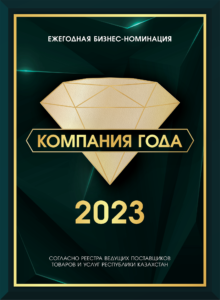 ТОО «Alexis» присвоен статус «Компания года 2023»
Друзья, в этом году наша компания получила Бизнес-номинацию “КОМПАНИЯ ГОДА 2023”!
Основанием для награждения стали результаты Реестра ведущих поставщиков товаров и услуг. Экспертный анализ проводится ежегодно Национальным информационно-аналитическим центром на основании проверки благонадежности предприятий отрасли, а также финансово-экономических показателей компаний.
Выбирая компанию Alexis, Вы получаете надежного партнера, который заботится о Вашем успехе. Свяжитесь с нами сегодня, чтобы узнать больше о наших продуктах и услугах, и убедитесь в высоком качестве и надежности наших решений.