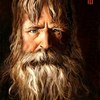
Years later, when Gao Renshi died of a simple fever, no family came to mourn him. But at dawn, a line of silent people appeared at the cemetery gates. They were not rich. They were not powerful. They were the ones Gao had buried—their widows, their orphans, the soldiers he had fed, the abandoned women he had sheltered.
In the twilight of the Tang Dynasty, under a sky smeared with the color of old blood, there lived a man the villagers called "Foolish Gao." His real name was Gao Renshi, and he was a gravekeeper.
The captain laughed. "The Tang Dynasty is dying, fool. Its laws are ash."
The soldier fell to his knees. "Why? I am nothing to you."
The soldier refused, but Gao closed the man’s fist around the jade. "I have no family," Gao said. "My grave will be dug by strangers. But if you live one honest day because of this token, then I will have left a mark deeper than any tombstone."
That night, the corrupt governor’s men arrived. They were hunting the deserter. They kicked down the door of Gao’s hut and found the soldier hiding beneath the altar where Gao kept his ancestor tablets.
Gao poured the porridge. "In the Analects of the Tang , there is no law against kindness. Eat."
Gao stepped between them. "This man is not a soldier anymore. He is a guest in my house. In the Tang Dynasty, even a criminal who shares your salt is your brother."
Gao helped him up. "In the cemetery, I bury dukes beside thieves. Their bones are the same weight. Their dust is the same color. A 'good man' is not one who does great deeds. He is one who remembers that every shadow was once a person."
The soldier wept. He confessed he had deserted the army after being ordered to burn a village of farmers who had refused to pay a corrupt governor’s tax. "I am no longer a warrior," the soldier said. "I am a coward and a traitor."
One bitter winter, a starving soldier crawled into the cemetery, his armor rusted to his flesh. "They call you a good man," the soldier hissed. "Give me your horse, or I will take your life."